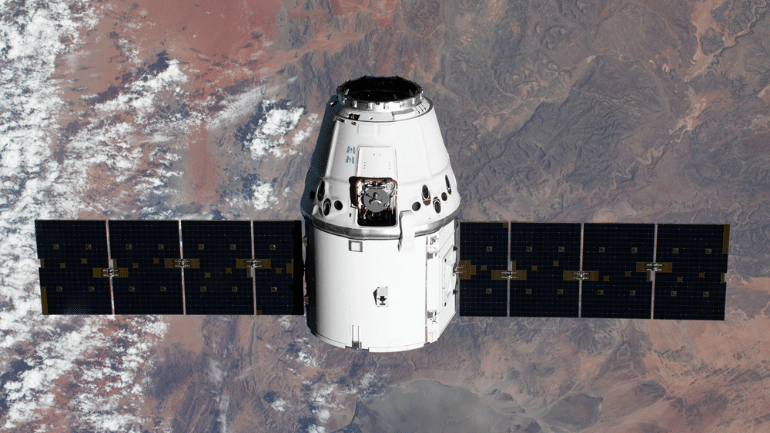
The telecommunications industry is witnessing a paradigm shift from static, terrestrial infrastructure models to the dynamic realm of non-terrestrial networks (NTNs). As companies like Starlink drive early deployments, NTNs will become integral to mobile network operations. Traditionally, telecommunications kept base stations static while users were mobile. However, NTNs invert this relationship. Users remain relatively static, while antennas aboard satellites move swiftly across the sky.
Anshul Bhatt, Chief Product Officer of the OSS business unit at Rakuten Symphony, describes this shift as adding a fourth dimension to the existing geographic coordinates: time. As satellites travel at high speeds, coverage and capacity change rapidly, creating transient service areas. Consequently, coverage and quality in NTNs become dynamic and dependent on time.
In NTNs, incident prioritization also undergoes a transformation. Bhatt illustrates, “If no satellite is passing through, an outage is less urgent.” In contrast, imminent satellite passes escalate the urgency to restore service. Satellite operations must also adapt to geopolitical needs. During emergencies, operators may demand on-the-spot satellite configurations, which require agility in cell provisioning according to the satellite passes.
The demands of operating NTNs extend beyond traditional telecom boundaries. Whereas terrestrial networks relied on ‘peak hours,’ NTNs experience peak demand worldwide at all times. Operations centers, therefore, must be adept at handling global Data, accessible and locally stored for relevant providers.
NTN services also present challenges of data sovereignty. Bhatt emphasized, “For an NTN operator providing global service, data integrity and localization are major issues.” Compliance with regional data regulations becomes complex as satellites traverse international borders.
Recognizing these complexities, Rakuten Symphony has designed the industry’s first NTN-specific OSS. This system utilizes real-time intelligence and automated provisioning to maintain service awareness. With satellite-specific dashboards linked to global databases, this OSS offers a comprehensive view correlating satellite paths with network services.
This solution is essential for measuring real customer experiences in NTN networks. In efforts led by Rakuten Symphony, solar-powered probes expand service monitoring to remote and power-inconsistent areas. This architecture, tailored to comply with diverse regulatory requirements, currently operates in eight global regions.
Currently, Rakuten Mobile uses the system, while collaborations with various operators and satellite providers in different orbits are underway. Integrating NTNs symbolizes not just an enhancement to radio access networks, but a reimagined partnership as cellular and satellite networks converge, promising seamless global connectivity.