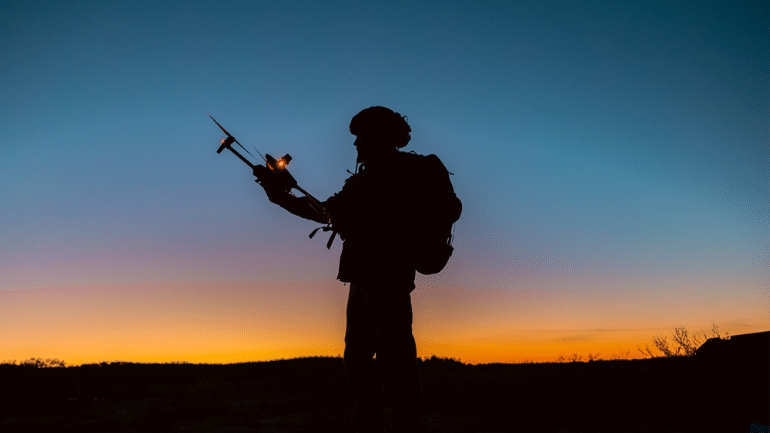
Ericsson has tested a tactical 5G network for military drone defence in Spain. The trial took place during Atlas 26, Spain’s main joint military exercise.
The test linked counter-drone and air-defence systems over a private mobile network. It allowed the Spanish Armed Forces to replace fixed cables with wireless connectivity.
This marks an important shift for defence communications. Military teams need fast deployment, secure links, and reliable coordination. Cables can slow operations and limit movement in the field.
The trial used Ericsson Ultra Compact Core, a mobile network system built for military environments. It combines 5G Core software, container technology, and the hardware needed to run locally.
In simple terms, the system works like a compact mobile network. Forces can deploy it close to operations. They do not need to depend on fixed public infrastructure.
The network operated under the 5G Spanish Cyber Defence Centre. This unit forms part of the Joint Cyberspace Command, known in Spain as Mando Conjunto del Ciberespacio.
Ericsson used radio frequencies reserved for military purposes. That detail matters. Dedicated spectrum reduces congestion and lowers the risk of interference from commercial traffic.
Low delay also played a central role in the exercise. Counter-drone platforms must detect, assess, and respond within seconds. A slow network can weaken that response chain.
This type of setup could help connect sensors, command systems, and defensive tools. It may give military units a clearer operational picture. It can also support faster decisions during hostile drone activity.
Ericsson Spain, County Manager, Juan Olivera, said: “This exercise has shown how commercial 5G innovation, hardened for defense, can give armed forces a decisive operational edge.
“A sovereign, deployable 5G network puts resilient, high-capacity connectivity exactly where it is needed, with no dependence on fixed infrastructure. By linking sensors to effectors in real time, we help defense forces coordinate their systems more effectively and operate with greater flexibility on the ground.”
However, battlefield networks face tough conditions. They must resist jamming, cyberattacks, harsh terrain, and equipment damage. A lab result or controlled exercise does not guarantee field success.
Interoperability will also remain a key issue. Defence forces often use systems from many suppliers. A tactical 5G network must integrate with existing radios, radar, and command platforms.
Cost and procurement could also slow wider adoption. Military-grade mobile systems need testing, certification, and long-term support. Governments must balance innovation with operational risk.
Even so, the Atlas 26 trial shows a clear direction. Defence organisations see private mobile networks as more than connectivity tools. They now view them as part of modern threat response.
For telecom engineers, the message is equally clear. 5G is moving beyond consumer broadband and enterprise campuses. It is entering mission-critical domains, where resilience matters as much as speed.