ISAC is moving from future vision to near-term network strategy. Ericsson wants operators to test the technology on 5G-Advanced networks before 6G arrives. The aim is simple. Mobile networks should communicate and sense their surroundings.
This matters because 5G has not delivered every promised enterprise capability. Many operators focused first on faster broadband and fixed wireless access. Advanced industrial features arrived slower than expected. Ericsson argues that 6G features should not wait for another long cycle.
ISAC stands for integrated sensing and communication. In plain terms, the network sends signals and reads reflections. Those reflections can reveal objects, movement, and possible threats. That turns cellular infrastructure into a sensing layer, not just a data pipe.
Peter Linder of Ericsson compared the change to packet switching in 4G. “I’ve been around,” he joked. “I almost see it as big as [packet switching]… We’re adding a totally new capability… initially to sense and detect things in the air or on the ground.”
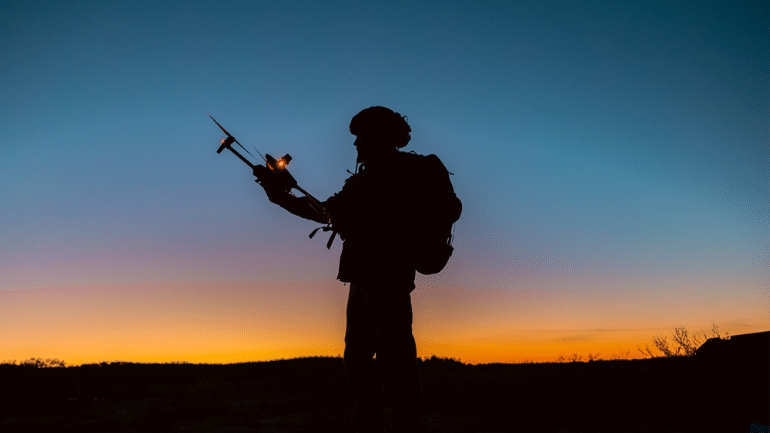
The early focus is drone detection. That demand now comes from defense, airports, borders, stadiums, and critical sites. Existing tools do not cover every scenario. Radar detects distant objects well. Cameras work at shorter ranges. RF sensors need a drone to emit signals.
However, many drones fly low, stay quiet, or operate beyond camera range. ISAC could help close those gaps. It will likely work beside radar, cameras, acoustic systems, and thermal sensors. No single tool can monitor all low-altitude activity.
Trials are already underway. Ericsson has tested ISAC with AT&T at a stadium in the United States. It has also worked with public safety and carrier partners in Europe. Verizon has secured spectrum for testing with Ericsson in Los Angeles.
Meanwhile, Nokia has explored similar technology for military drone detection. XCOM RAN is also promoting ISAC for private 5G. Private networks could use it in factories, ports, campuses, and industrial yards.
The opportunity is significant, but challenges remain. Operators must prove accuracy, cost, and business value. Regulators must also consider privacy and lawful monitoring. A network that can “see” will raise new policy questions.
Still, demand keeps rising. Drone delivery, public safety, and border monitoring all need better awareness. Amazon and Walmart already operate drone delivery activity in some areas. More air traffic will require stronger detection and coordination systems.
Linder summed up the pressure clearly. “There are a lot of activities brewing in that lower airspace, where current detection capabilities are not sufficient. And [all of it is] creating demand for ISAC.”
For telecom engineers, ISAC may become a key bridge to 6G. It gives late-stage 5G a fresh role. More importantly, it lets the industry mature a 6G capability before launch. That could help avoid another slow generational transition.